
Programme & Speakers
Eight presentations. Four morning classes. Five afternoons diving. One week that changes how you think and do.
The programme is built around a single principle:
you should not leave this conference with more information. You should leave with better judgment.
Every session is chosen because it has a direct application to what happens before, during, and after a dive — in planning, in team dynamics, in how you respond when things do not go the plan.
08:30-09:15 - Registration
09:20-09:40 - Opening Session
Gareth Lock
.
09:40-10:20 - High-Performance Teams in Diving
Dave Conlin, Ph.D
.
10:40-11:20 - Don’t Wait (For Incidents to Occur) - Learn Every Day Using HOP & HF Principles!
Steve Smith
.
11:40-12:20 - From Attention to Action: Predictive Modeling of Diver Decisions with In-Mask Eye Tracking
Connor Tate
.
12:40-13:20 Lunch
13:20-14:00 - How to make HF critical to a profitable scuba business
Brent Webb
14:20-15:00 - Before the Report Is Written: How Social Media Decides What Went Wrong
Mike Mason
.
15:20-16:00 - Metabolising Experience: When Trauma Is Too Much to Process
Dr Laura Walton
.
16:20-17:00 - Insights from DAN’s Global Fatalities and Injury Monitoring
Andrew Leonard
.
17:20-18:00 - Closing Address
Gareth Lock
Additional Presentations Monday, Tuesday and Thursday evening
Friday, After Dinner Presentation: The Secret Airbase on the Island of Vis and the Crash of the Tulsamerican: Lessons in Human Factors Across Teams, Cultures and Missions. Dave Conlin Ph.D.
Click the photos of the speakers for their biographies

35mm Film
Learn how to get crisp images using cameras from the 60s.
Presentations
This contains a selection of presentations concerning Human Factors, Just Culture, and Learning
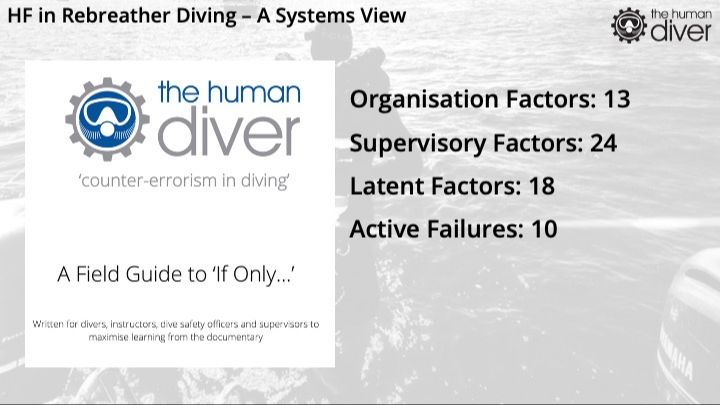
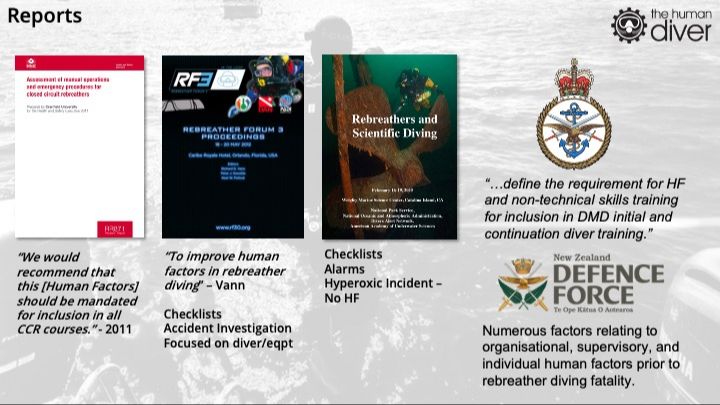
RF4 - Human Factors in Rebreather Diving - 45 mins
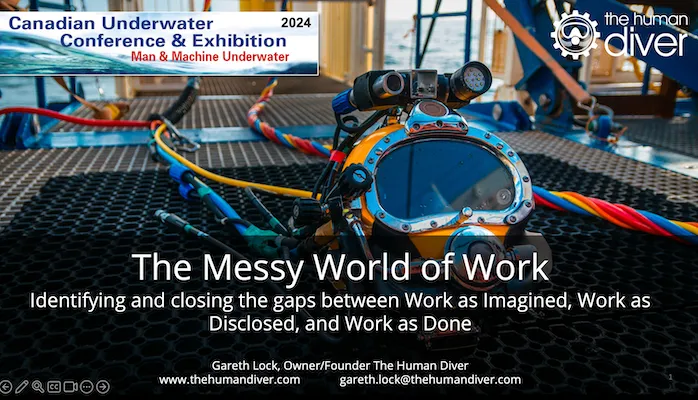
The Messy World of Diving - CUCE 2024 - 30 mins
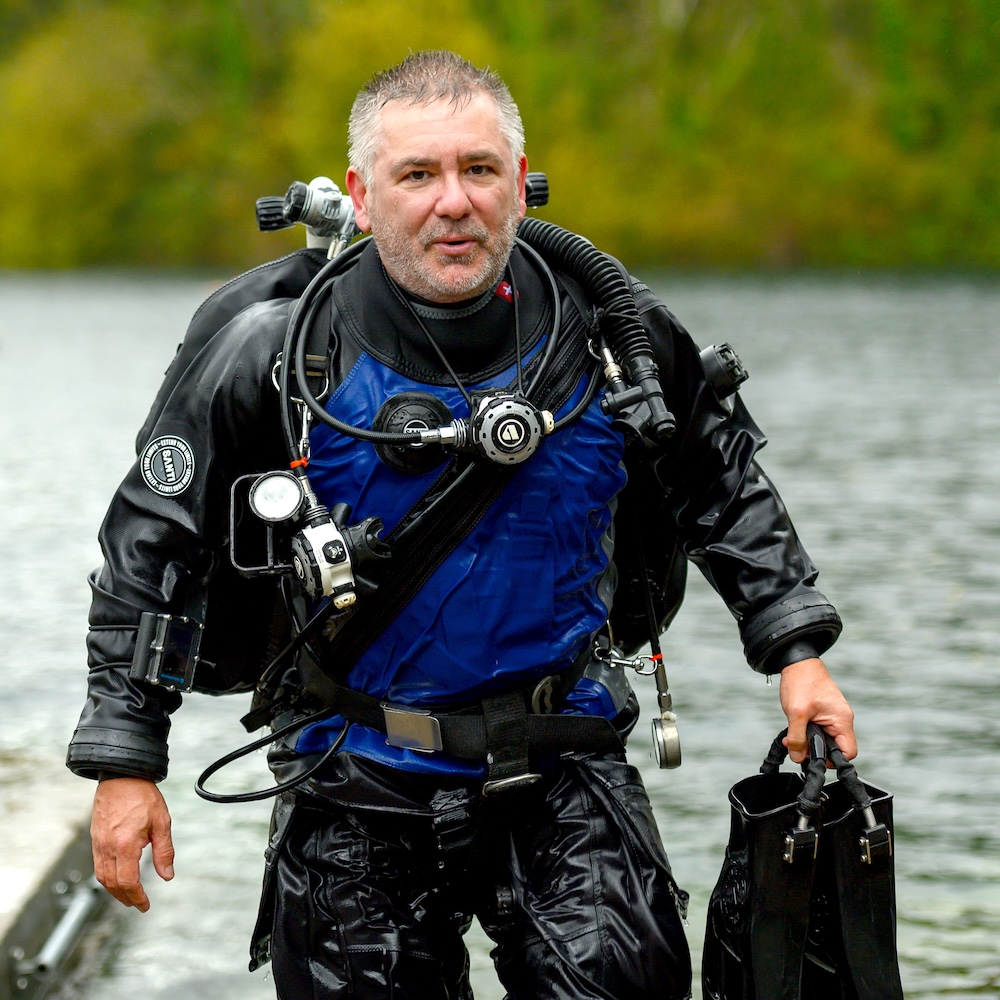
Sunday: 09:20-09:40
Gareth Lock
Opening Session
Why this matters. What ten years of The Human Diver has shown about how diving culture handles failure, what has changed, and what has not. And why this week is different from a course
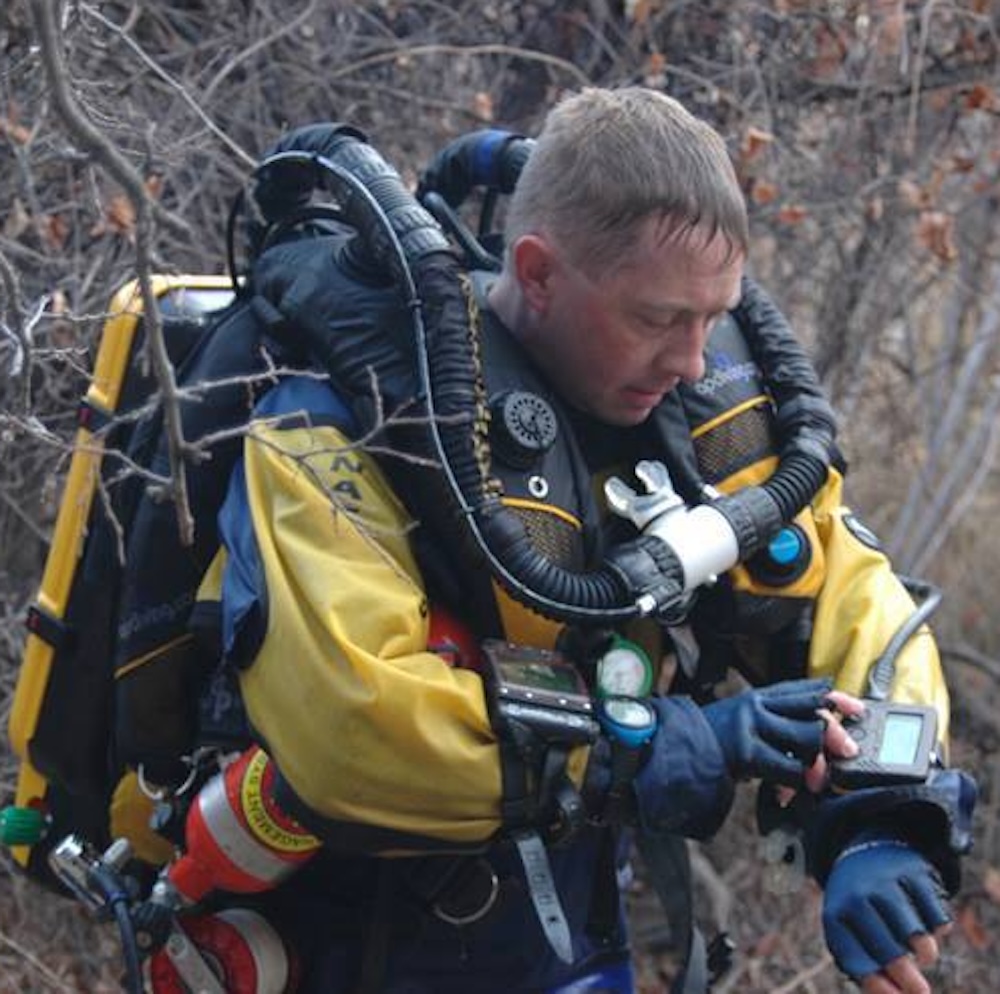
Sunday: 09:40-10:20
Dave Conlin, Ph.D
High-Performance Team Operations in Diving
What separates teams that perform under pressure from teams that fragment. Not theory from a textbook — evidence from environments where the cost of fragmentation is measured in lives. Dave has lead the Submerged Resources Centre for many years, building HF into their activities.
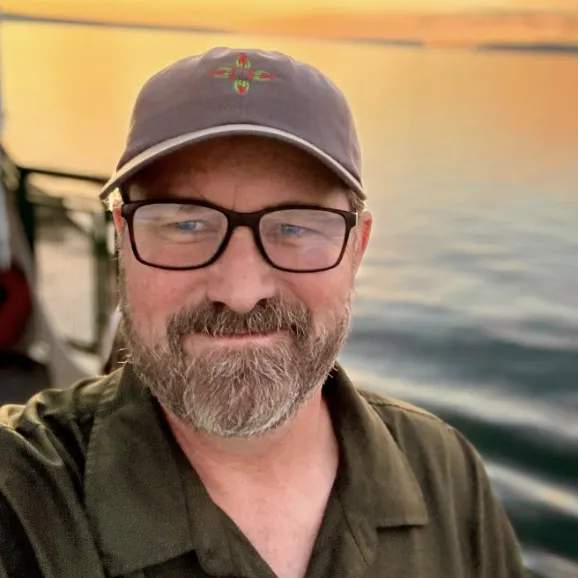
Sunday: 10:40-11:20
Steve Smith
Don’t Wait (For Incidents to Occur) - Learn Every Day Using HOP & HF Principles!
A direct comparison between traditional incident analysis and a Human and Organisational Performance approach. Steve will walk through the same event twice — once through a blame lens, once through a learning lens — and the difference in what you see is the point.
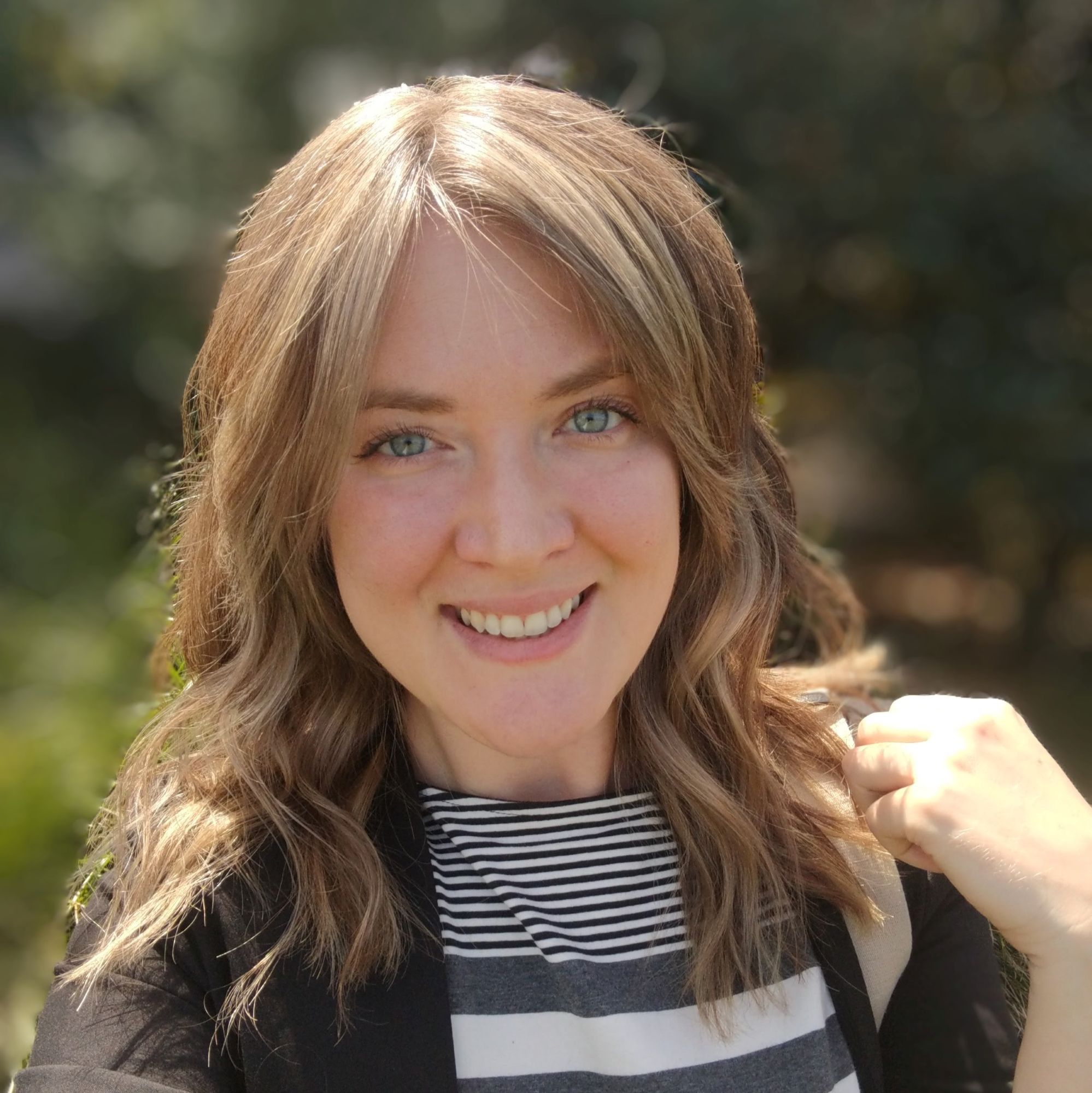
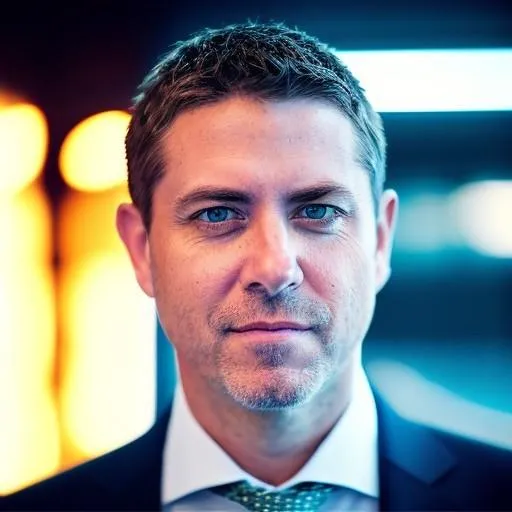
Sunday: 11:40-12:20
Connor Tate
From Attention to Action: Predictive Modeling of Diver Decisions with In-Mask Eye Tracking
Research from a US Navy-funded programme combining simulated dive scenarios with in-mask eye-tracking technology and a computational model of diver decisions. What this shows about how experienced divers and novice divers allocate attention at critical moments — and what that means for training.
Sunday: 13:20-14:00
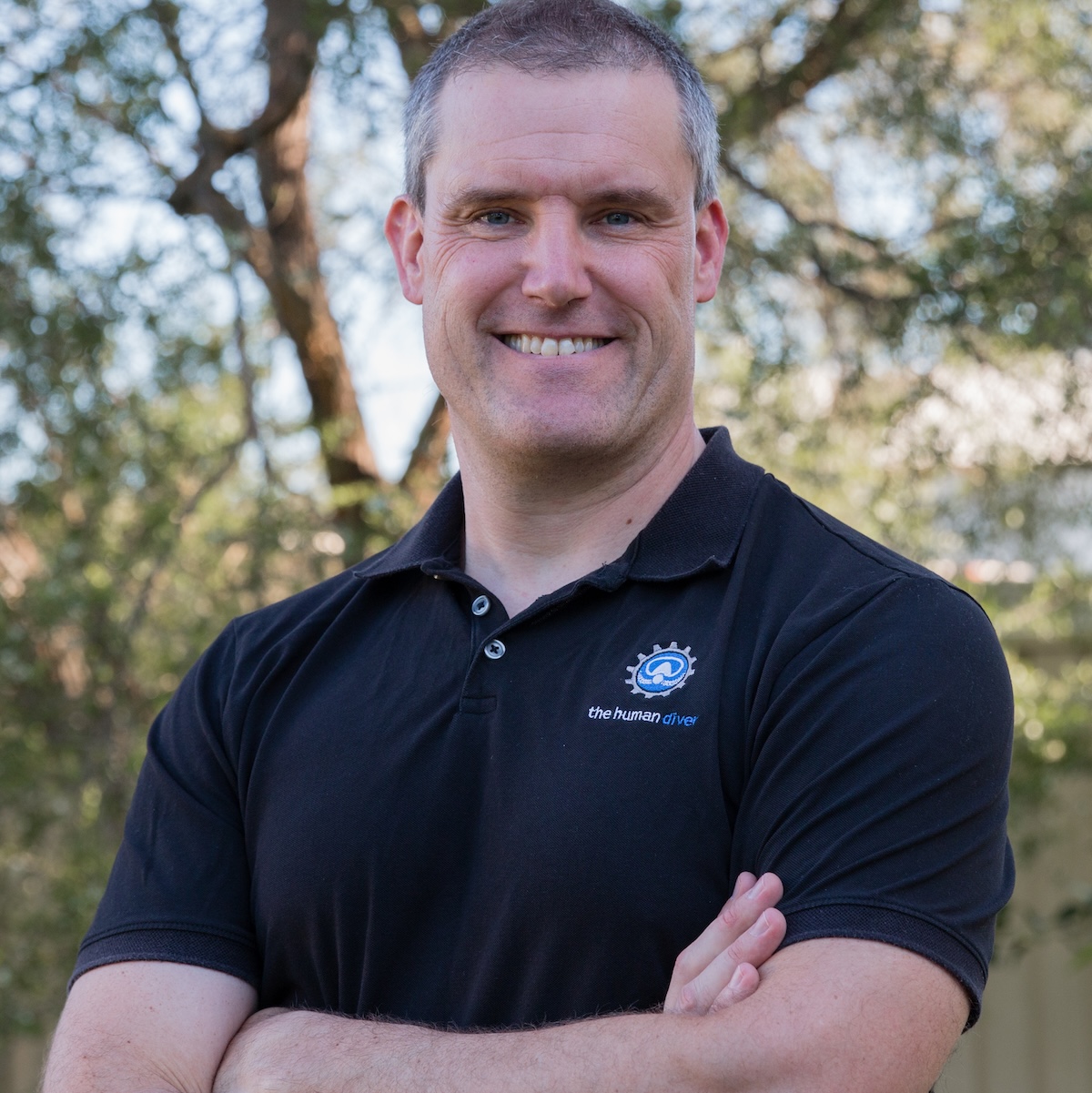
Brent Webb
How to make HF critical to a profitable scuba business
A practical case for building a dive operation around HF principles, not as an add-on but as the operational foundation. Structured debriefs, psychological safety, communication frameworks, and risk-aware leadership — and how each one improves both safety and commercial performance.
Sunday: 14:20-15:00
Mike Mason
“Before the Report Is Written:
How Social Media Decides What Went Wrong”
Dive incidents are now investigated on Facebook before the official report is started. This talk examines how narrative, blame, and hindsight operate in online diving communities — and how to engage with those discussions in a way that generates learning rather than noise.
Sunday: 15:20-16:00
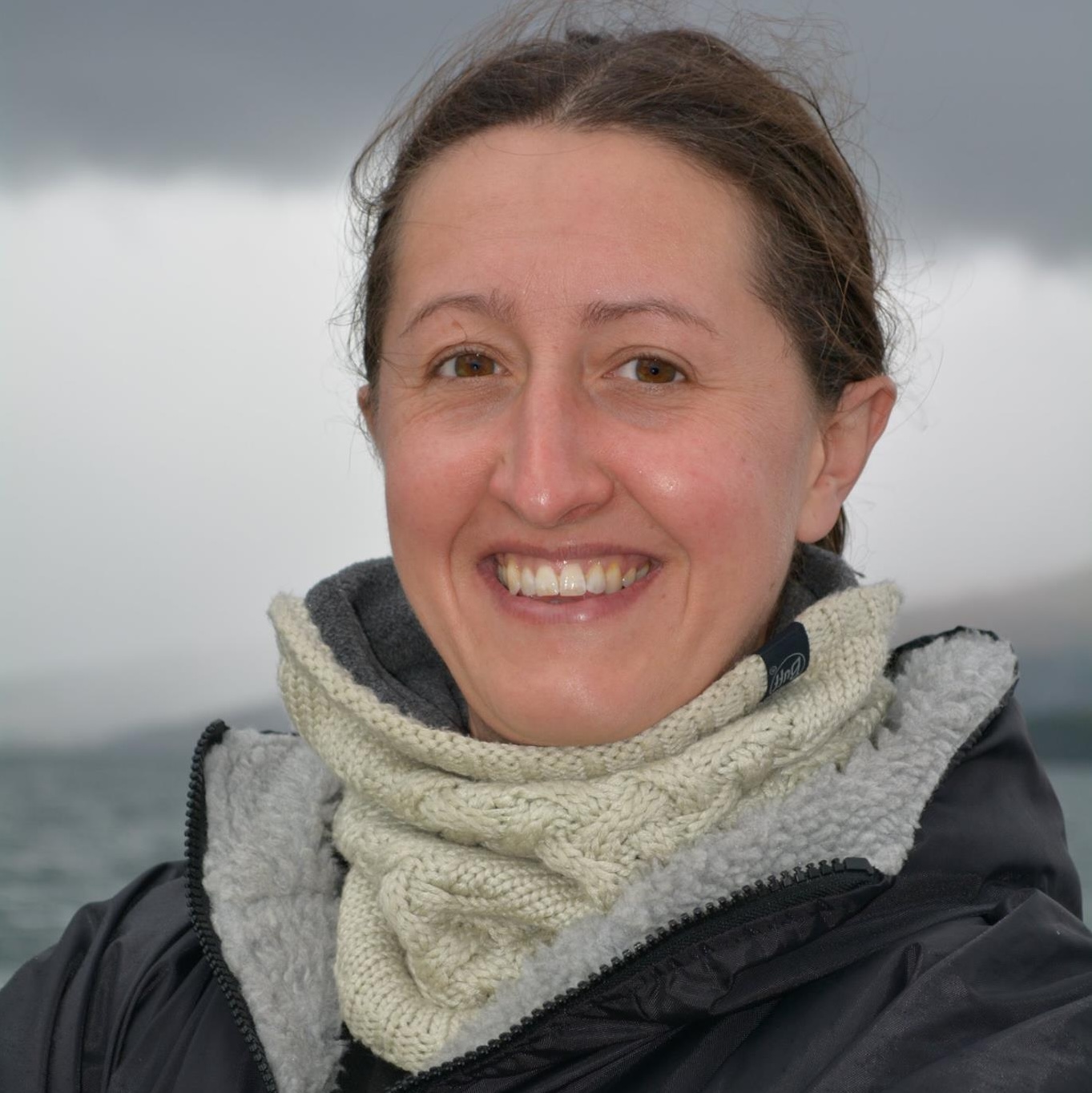
Dr Laura Walton
Metabolising Experience: When Trauma Is Too Much to Process
After a bad dive, most people talk. Sometimes that is not enough. Dr Walton works clinically with divers following potentially traumatic events and will explain why some experiences get stuck, what the psychological mechanism looks like, and what actually helps — both for the diver and for the people around them.
Sunday: 16:20-17:00
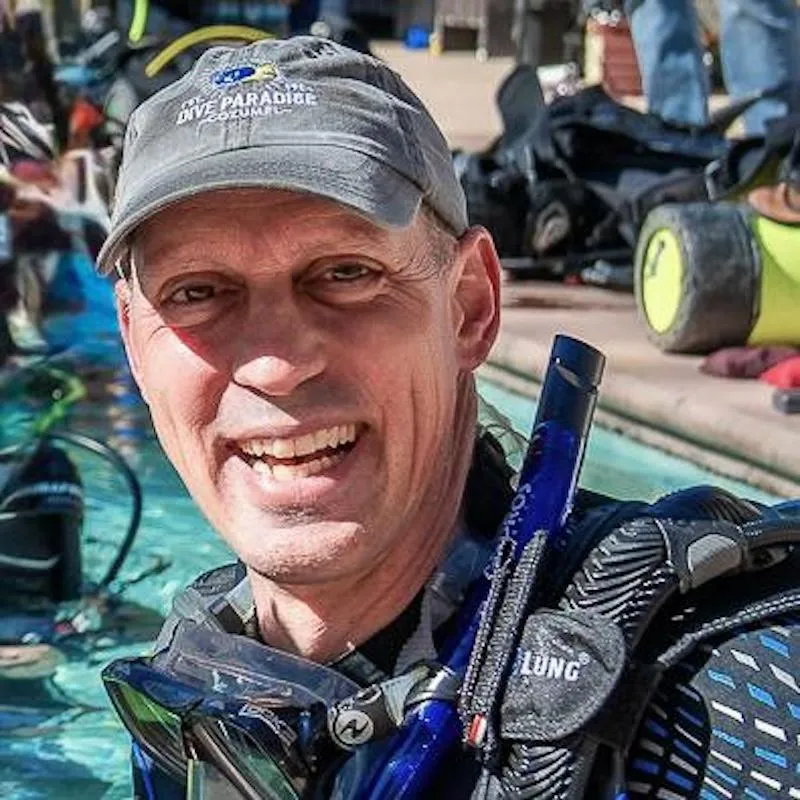
Andrew Leonard
Insights from DAN’s Global Injury and Fatality Monitoring
What does the global data actually show? DAN's longitudinal surveillance programme draws on incident reports, medical records, media sources, and investigative collaborations to identify the behavioural, organisational, and contextual factors that appear consistently in diving fatalities. The patterns are not what most people assume.
Sunday: 17:20-18:00
Gareth Lock
Closing Session
What this day has shown, what the week ahead will do with it, and why the conversation that begins in this room does not have to end when you fly home.
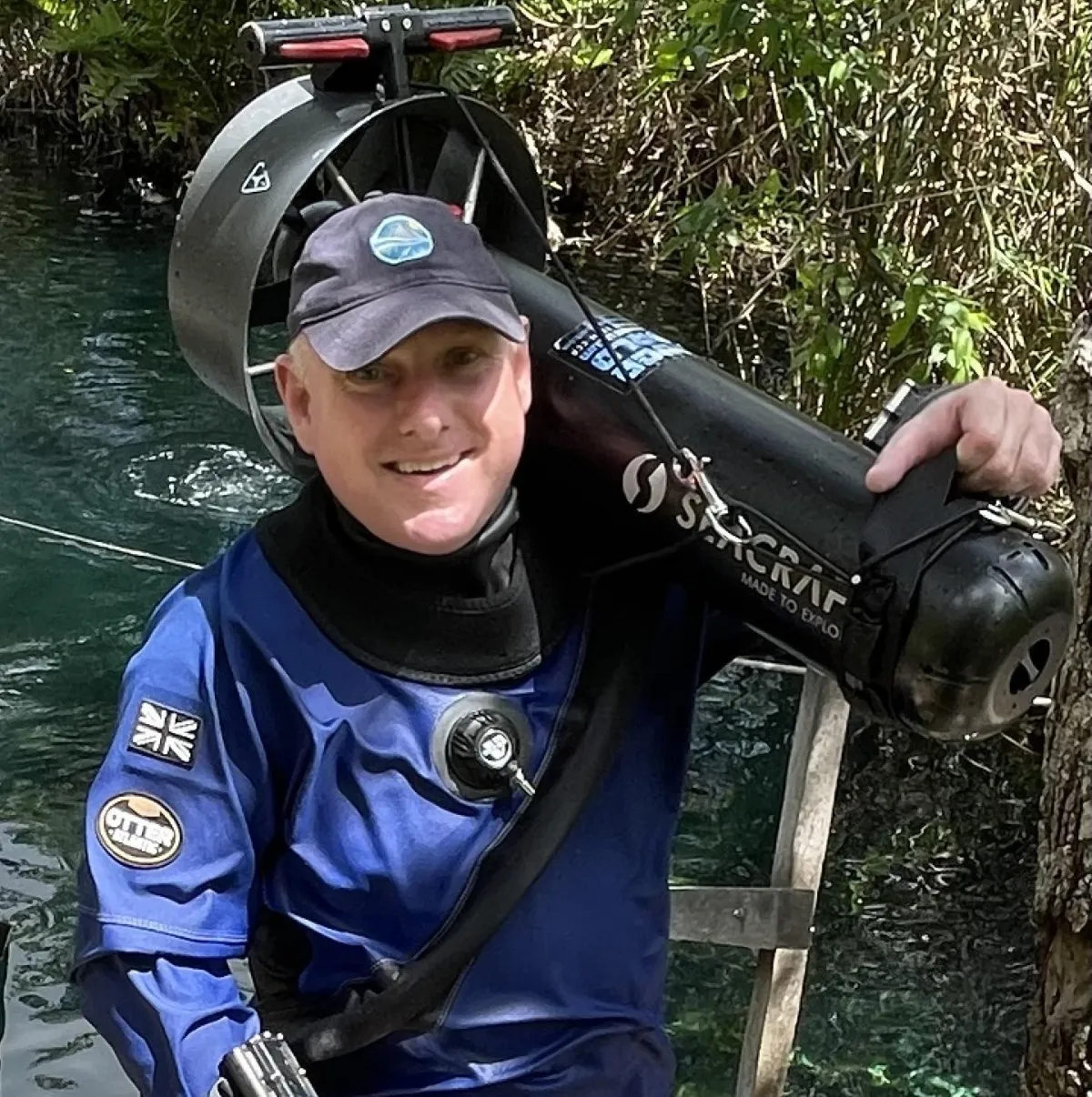
Monday Evening
Lanny Vogel
Diving Deeper Into a Fatal Cave Diving Event With Human Factors.
A closer look at the events in Cenote Nariz, Tulum, Mexico in 2024 that resulted in the death of a CCR cave diver. Traditional accident analysis often focuses on the proximal cause and seeks to attribute blame. This presentation will examine the event in depth, focussing on why decisions made sense to those involved and identifying the wider systems, processes and performance shaping factors.
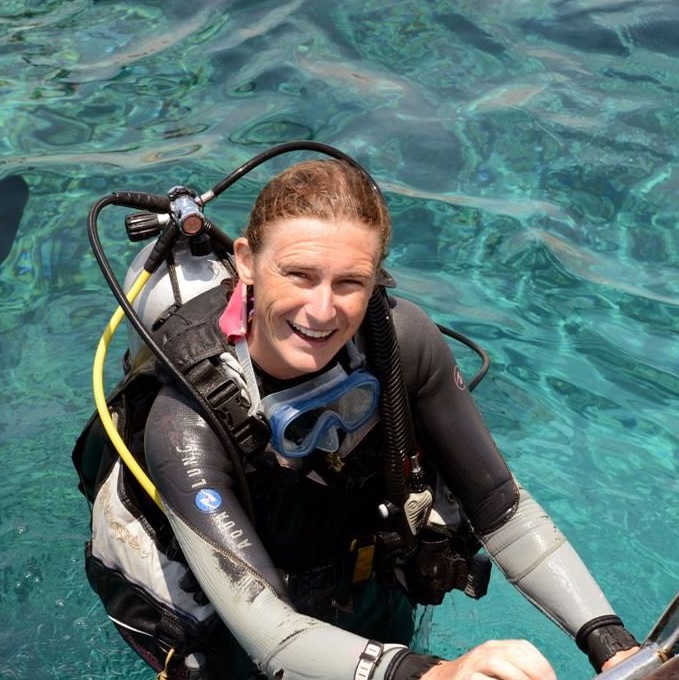
Tuesday Evening
Jenny Lord
The Bits We Actually Use: Human Factors in Real Diving
Most divers know what good practice looks like. So why do the same problems keep appearing? Jenny draws on experience from liveaboards, guide work, and mixed-team diving to identify the small, practical HF tools that survive contact with busy schedules, tired divers, and imperfect conditions.
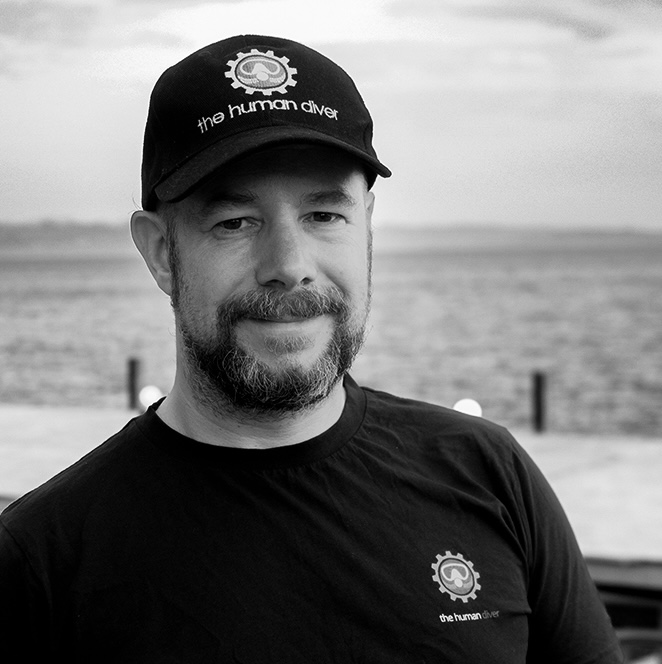
Thursday Evening
Andrzej Gornicki
Silence on the Surface
How toxic team dynamics create the conditions for incidents long before any diver enters the water. Authority gradients, fear of conflict, blame culture, and suppressed concerns are not personality problems — they are system outputs. This talk names them, explains their mechanism, and offers practical signals to look for before the damage is done.
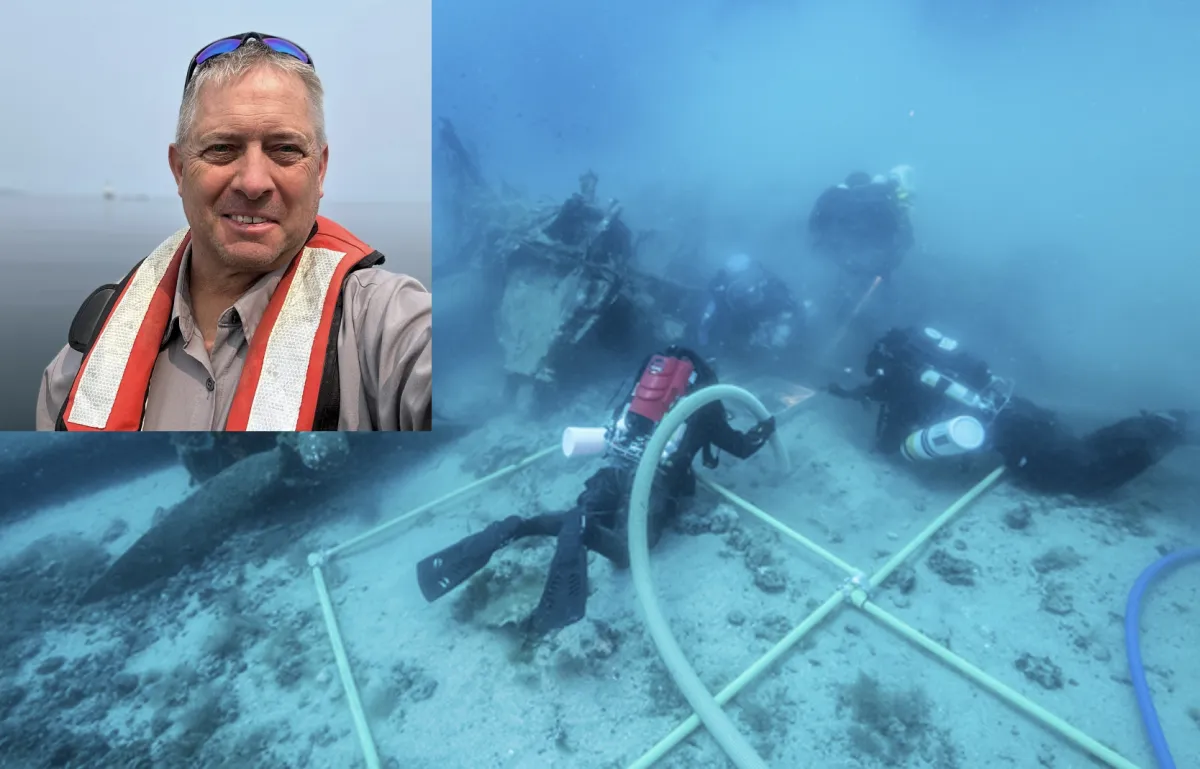
Friday Evening - After Dinner Speech
Dave Conlin, Ph.D
The Secret Airbase on the Island of Vis and the Crash of the Tulsamerican: Lessons in Human Factors Across Teams, Cultures and Missions.
On December 17, 1944 an American B-24-J heavy Bomber, serial number 42-51430, the Tulsamerican crashed in the waters near Vis after being damaged on a mission against the German oil refinery at Odertal Germany- seven of the crew survive but three are lost.
In December of 2010 the wreckage of the plane was found by a local diver Darko Bojanic. In 2017, after almost a year of planning an international team comprised of British, Greek, Polish, American and Croatian divers begin a project funded by the US Defense Personnel Accounting Agency to recover and account for the three still missing crew members. What followed was a massive, complex and high-stakes project that meshed together teams, cultures and missions.
This talk discusses the history of the site, the challenges of the dive, and the Human Factors challenges that all came together over the six week project.
Tuesday Evening
Jenny Lord
The Bits We Actually Use: Human Factors in Real Diving
Most divers already know what good practice looks like. So why do the same issues keep appearing on real dives? This talk focuses on the parts of human factors that actually survive real diving — busy schedules, mixed teams, fatigue, time pressure, and imperfect conditions. If you’re about to spend a week on a boat with strangers, diving several times a day, the way people communicate, coordinate, and make decisions matters. Drawing on practical examples from training, guiding, and three human factors-focused liveaboards, the session explores small, usable tools that reduce conflicts, support better learning, and help dives run more smoothly. The focus is on making it easier to do the right thing when conditions aren’t ideal and people are busy, tired, or under pressure.
Thursday Evening
Andrzej Gornicki
Silence on the Surface
Silence on the Surface explores how toxic interpersonal dynamics within dive teams and dive centres quietly erode safety long before an incident occurs. Drawing on Human Factors (HF) and Non-Technical Skills (NTS) perspectives, the presentation reveals how fear of conflict, authority gradients, blame culture, and poor psychological safety suppress communication, distort decision-making, and normalize unsafe practices.
The presentation shows how silence—missed questions, unspoken concerns, and unchallenged decisions—becomes a hidden risk multiplier affecting instructors, divemasters, and guests alike. What often gets labelled as “diver error” is reframed as the predictable outcome of toxic systems that discourage speaking up.
The presentation concludes with practical insights for instructors, dive leaders, and operators on how to recognise early warning signs of toxicity, restore psychological safety, and transform silence into constructive dialogue—making it easier to do the right thing and harder to do the wrong thing, both on the surface and underwater.
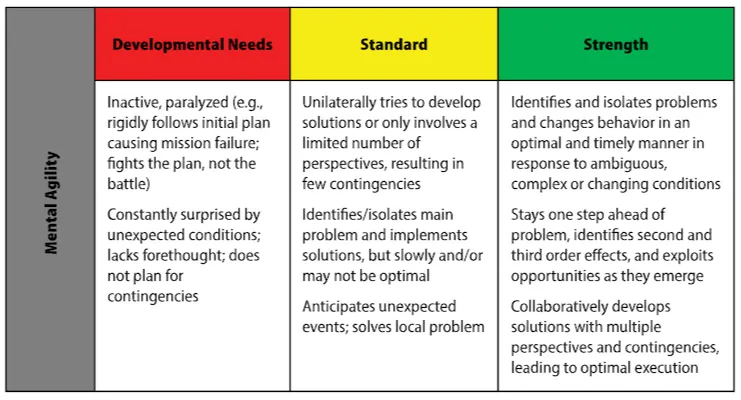
Resources: Tools and Measures for USMC NCO Talent Assessment
The discussion about accountability and standards led me to search for this resource. While there will be performance metrics in the CAF, and this shouldn't conflict, these provide clear expectations of what team members should be doing, and allow others (not just the leadership) to hold each other mutually accountable. This framework should be used on a continual basis and not just for the annual PER.
Resources: Be Curious, Not Judgemental
This two-minute clip brings the essence of the course together. Be curious, not judgemental. Look at the background and context, and ask curious questions.
Resources: Tools and Measures for USMC NCO Talent Assessment
The discussion about accountability and standards led me to search for this resource. While there will be performance metrics in the CAF, and this shouldn't conflict, these provide clear expectations of what team members should be doing, and allow others (not just the leadership) to hold each other mutually accountable. This framework should be used on a continual basis and not just for the annual PER.
Resources: Be Curious, Not Judgemental
This two-minute clip brings the essence of the course together. Be curious, not judgemental. Look at the background and context, and ask curious questions.
Show Offers
RF4 Show Offer Valid Until 22 April 2023 - Buy Essentials, Get a Copy of Under Pressure for Free. Bring your proof of purchase (20-22 April) to the THD stand for your book.